Technology used to locate lost pets

What To Do When Your Pet Goes Missing

The first 24 hours shape everything that follows. These are the steps that give a lost pet the best chance — whether or not you work with us.

Start Here

The First 24 Hours

Work through these in order. Even if you only manage the first three, you've already improved your pet's chances considerably.

01

Search Close, Then Widen

Most lost pets — especially indoor cats — stay within a few hundred yards and hide nearby. Search close to home first: under porches, in sheds, garages, crawl spaces, dense shrubs and anywhere a frightened animal can wedge itself.

Go slowly and quietly. A scared pet will stay silent even when it hears you calling.

02

Search At The Right Times

Dawn and dusk are when lost pets are most likely to move. Those quiet, low-traffic hours are also when you're most likely to hear or spot them. Repeat your search at these times rather than all day long.

Bring a flashlight even in daylight — it reveals eyeshine in dense cover.

03

Set Up A Scent Station

Place a feeding station with familiar-smelling food and water near where your pet was last seen. Add an item of unwashed clothing that smells like you. Check it at a distance so you don't scare them off if they return.

Don't leave food out overnight unsupervised — it can attract other animals.

04

Don't Chase Or Call Repeatedly

If you spot your pet, don't run at them. A frightened animal can bolt into traffic or a place you can't follow. Sit down, turn away, and let them come to you — or use a familiar treat and a calm, low voice.

This is the most common mistake, and it's the one that loses pets a second time.

05

Get The Word Out Fast

Post clear photos to local Facebook groups, Nextdoor and lost-pet pages. Notify shelters, vets and animal control within a few hours' radius. The faster your pet's face circulates, the faster a sighting reaches you.

Include a photo, the last known location, the date and a way to reach you.

06

Set Up Trail Cameras

If you have a spot where your pet was seen or where food is being eaten, a trail camera confirms whether they're still in the area and what times they're moving. It also tells you whether the food is going to your pet or to raccoons.

Borrow one from a neighbor if you don't own a camera — they're worth their weight in gold.

Get Noticed

Making A Flyer That Works

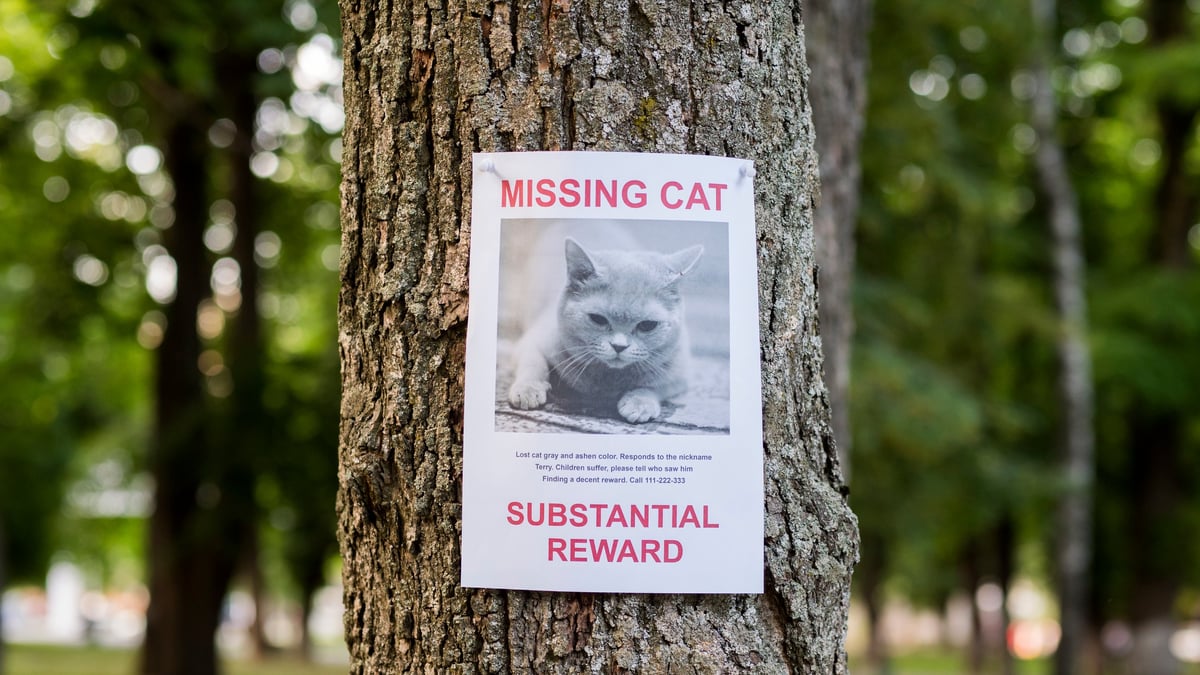
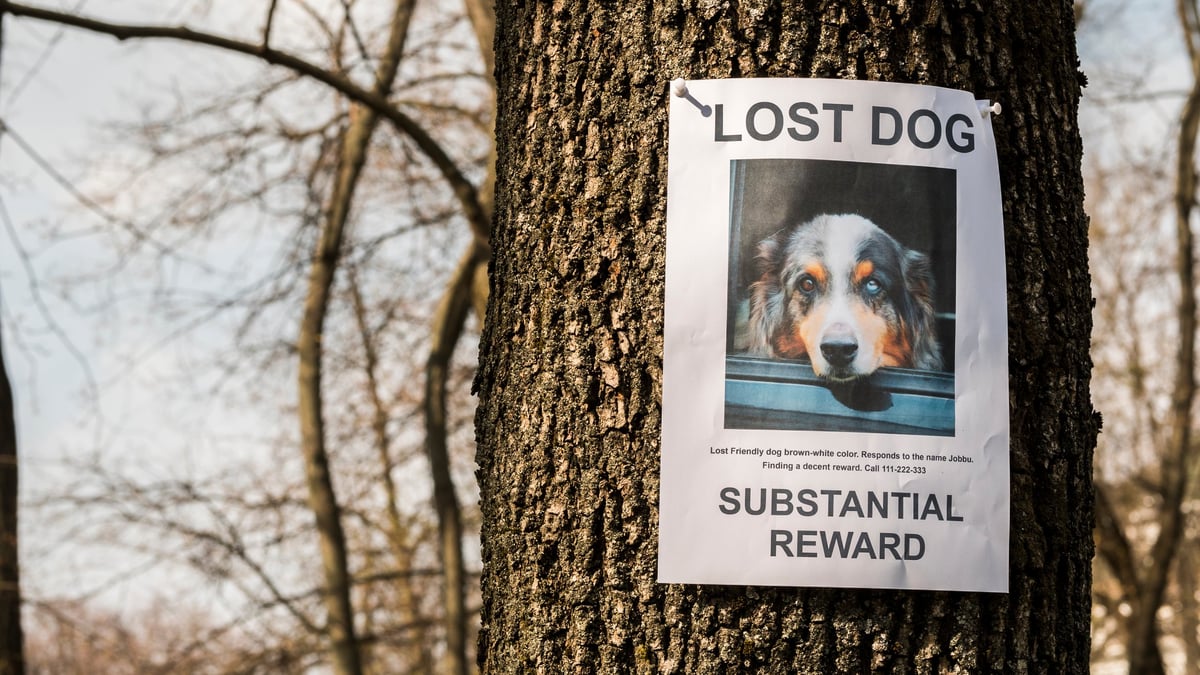
A flyer is still one of the most effective tools available — but only if people can read it from a moving car. Big photo, few words, no clutter.

  • One large, clear photo

    The single biggest factor. Use a full-body shot with good lighting, cropped so your pet fills the frame.

  • Three words maximum for the headline

    "LOST DOG" or "LOST CAT" in bold. Don't bury the point under your pet's name.

  • Last seen location and date

    A cross-street or neighborhood plus the date. Vague locations waste people's time and yours.

  • A way to reach you — and a reward line

    A number or "message us on Facebook" plus a brief reward note. Rewards motivate strangers to look twice.

Where to post: intersections near the last-seen point, vet offices, pet stores, shelters, community mailboxes, and anywhere neighbors gather. Put them inside plastic sleeves so rain doesn't ruin them.

A missing cat notice tied to a tree in a park
A missing dog flyer attached to a tree in a park
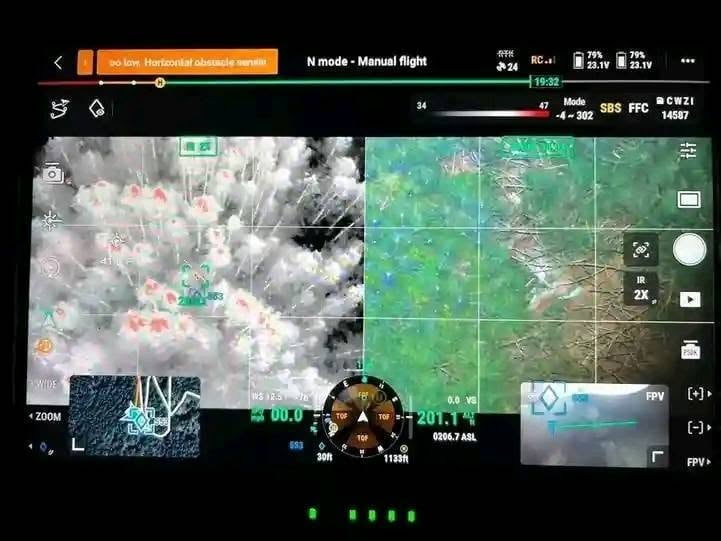
Drone camera interface showing aerial view during a search
Learn From Others

Mistakes That Cost Time

These are the ones we see most often. Avoiding them can mean the difference between a pet found in hours and one found in weeks.

Calling your pet's name over and over

It feels like the right thing to do, but repeated calling can push a frightened animal further away. Search quietly and listen instead.

Only searching during the day

Most lost pets move at night. A search that stops at sunset misses the hours when your pet is most active and easiest to spot with a light.

Waiting a day before telling anyone

There's no waiting period before you can report a lost pet, and no reason to delay. Every hour of visibility compounds.

Assuming they've gone far

Overwhelmingly, lost pets stay close. Exhausting yourself searching miles away while they're under the neighbor's deck is the most common wasted effort.

Giving up when leads dry up

Many lost pets are found after days, weeks, and sometimes even months. Cases go quiet and then break open — often because the owner kept looking.

Need Help Right Now?

You don't have to work through this alone. Tell us what's happened and we'll help you decide what to do next — even if that's just pointing you in the right direction.